


How Dexory turned early adopters into advocates by building continuous value delivery from day one | Andrei Danescu
Description
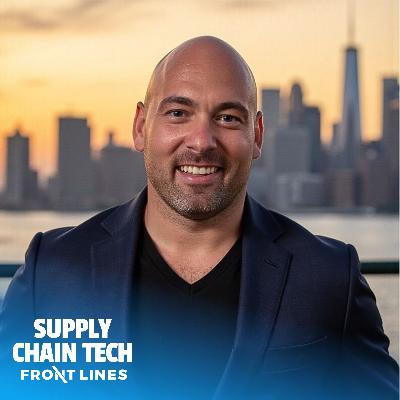
Dexory builds data intelligence platforms for logistics, using autonomous robots to create digital twins of warehouse operations. With over $280 million raised through a recent preemptive Series C, the company has scaled from a bootstrapped startup to a full-stack robotics operation expanding across Europe and the US. In this episode of Category Visionaries, I sat down with Andrei Danescu, Founder and CEO of Dexory, to unpack how the company navigated early product-market misalignment, cracked the messaging for a category-creating technology, and maintained execution velocity as a capital-intensive business.
Topics Discussed:
- Building in logistics after observing parts tracking failures in Formula One operations
- The costly mistake: spending years on public space robots before committing to warehouse logistics
- Why bootstrapping for five to six years forced product discipline before venture funding
- Messaging shift from autonomous robot capabilities to inventory visibility pain points
- Zero infrastructure change as a strategic product constraint for live warehouse deployments
- Geographic expansion strategy using multinational customers for internal reference selling
- How the convergence of AI adoption, sensor cost reduction, and industry data appetite created market timing
- Maintaining commercial velocity as the primary metric for Series C readiness in full-stack businesses
GTM Lessons For B2B Founders:
- Message to the problem, not the technology stack: When Dexory led with "world's tallest autonomous robots" and "scan 10,000+ pallets per hour," prospects responded with "what does it actually do?" The shift to leading with inventory visibility and stock control—a pain point customers immediately recognized—unlocked early traction. For category-creating products, customers need to map your solution to existing problems before they can appreciate technical differentiation. Andrei's insight: start with the problem customers know they have, then layer in technical superiority once you've established relevance.
- Turn operational constraints into product requirements: Dexory designed around the reality that warehouses operate as "live businesses" that cannot pause for infrastructure overhauls. Zero infrastructure change became a core product spec, not a nice-to-have feature. This required autonomous navigation in complex, dynamic environments rather than controlled spaces. Founders building for established industries should identify non-negotiable operational constraints early and architect solutions that respect them rather than requiring customers to adapt their operations.
- Build value expansion mechanisms before closing your first customer: Dexory established infrastructure for continuous product improvement from day one, treating early deployments as ongoing collaborations rather than transactions. Customers influenced roadmap priorities while Dexory delivered incremental value increases over time. This transformed buyers into advocates who took "point of pride" in the technology. The tactical approach: structure customer agreements and product architecture to support continuous delivery cycles that compound value rather than one-time implementations.
- Use multinational customers as geographic expansion infrastructure: Instead of opening regional offices across territories, Dexory targeted global companies where a European deployment could generate US interest through internal reference calls. Andrei noted this creates "a lot stronger" references "because they're already part of the same company." The expansion velocity this enabled—UK to Europe to US without massive regional buildout—proved critical for a capital-intensive business. Founders should prioritize customers with multi-region operations who can accelerate geographic reach through internal advocacy networks.
- Treat post-raise execution velocity as your next round metric: After Dexory's Series B, investors returned a month later to find the company "already ahead of plan." This consistent over-delivery on growth targets set up their preemptive Series C. For full-stack businesses where each dollar deployed takes longer to show returns, maintaining commercial momentum signals execution capability that justifies higher valuations. Andrei's warning: the temptation to slow down and "invest a bit more in product" after raising capital is exactly when founders need to double down on commercial traction as the North Star.
//
Sponsors:
Front Lines — We help B2B tech companies launch, manage, and grow podcasts that drive demand, awareness, and thought leadership. www.FrontLines.io
The Global Talent Co. — We help tech startups find, vet, hire, pay, and retain amazing marketing talent that costs 50-70% less than the US & Europe. www.GlobalTalent.co
//
Don't Miss: New Podcast Series — How I Hire
Senior GTM leaders share the tactical hiring frameworks they use to build winning revenue teams. Hosted by Andy Mowat, who scaled 4 unicorns from $10M to $100M+ ARR and launched Whispered to help executives find their next role.
Subscribe here:









 United States
